
Italian Meringue
Italian meringue is the stable one. Instead of whipping raw whites with sugar and hoping, you pour a boiling sugar syrup into the whites as they whip, which cooks them on the way in. What you get holds its shape for days, does not weep, and takes a blowtorch beautifully.
It is the meringue that goes on top of the marquise, on lemon pie, and into buttercream. There is only one hard rule: a thermometer is not optional. The difference between 110°C and 121°C is the difference between meringue that slumps and meringue that sets like marshmallow, and you cannot judge that by eye.
How to Make Italian Meringue
Two things happen at once: a sugar syrup climbs to temperature on the stove while the whites whip in the mixer. Getting them to line up is the whole skill, which is why everything is measured out before the pan goes on.
1. Cook the syrup
- 1
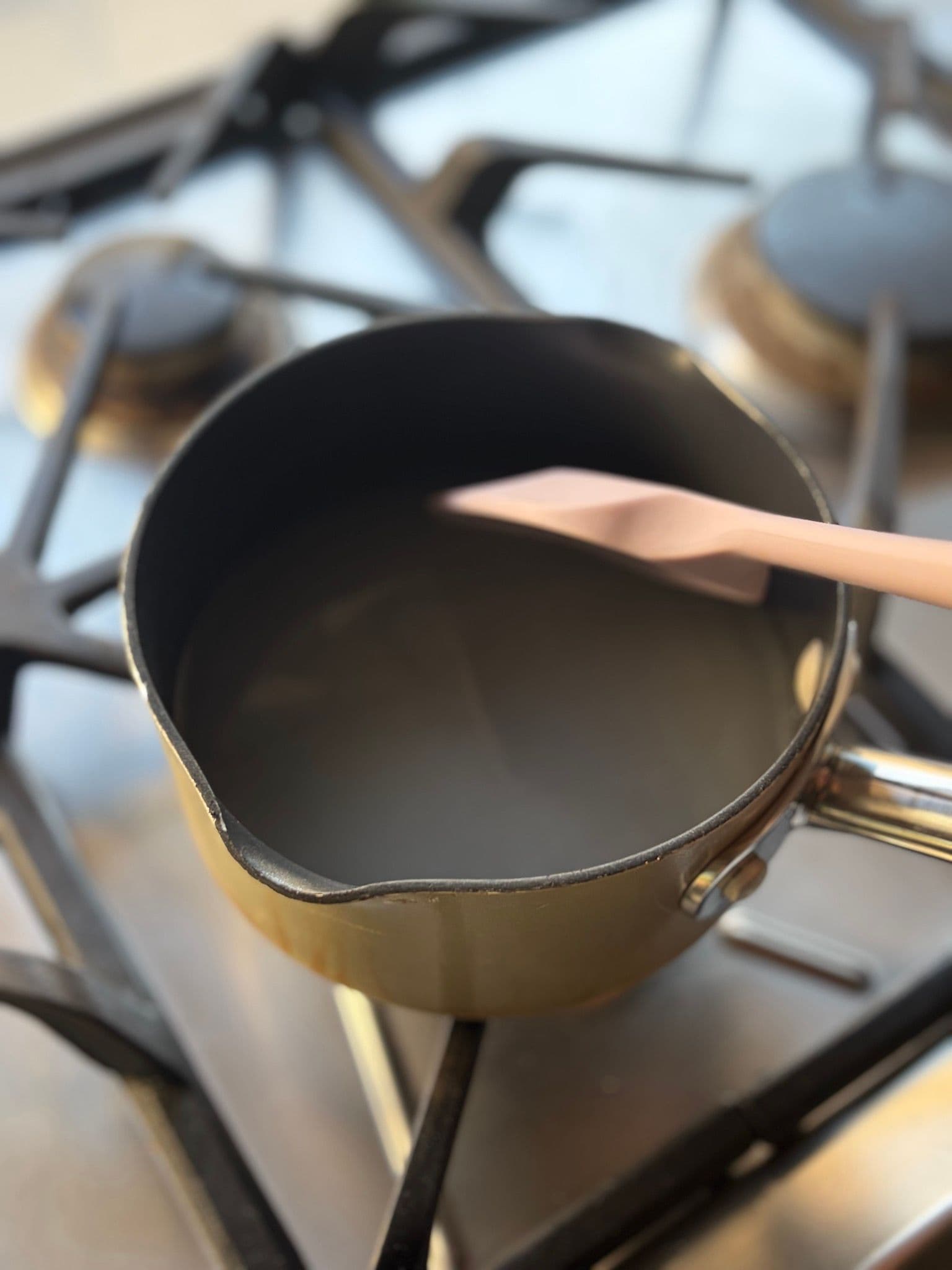
Sugar and water over medium heat for about 5 minutes, then stir for a minute to dissolve the sugar fully.
- 2
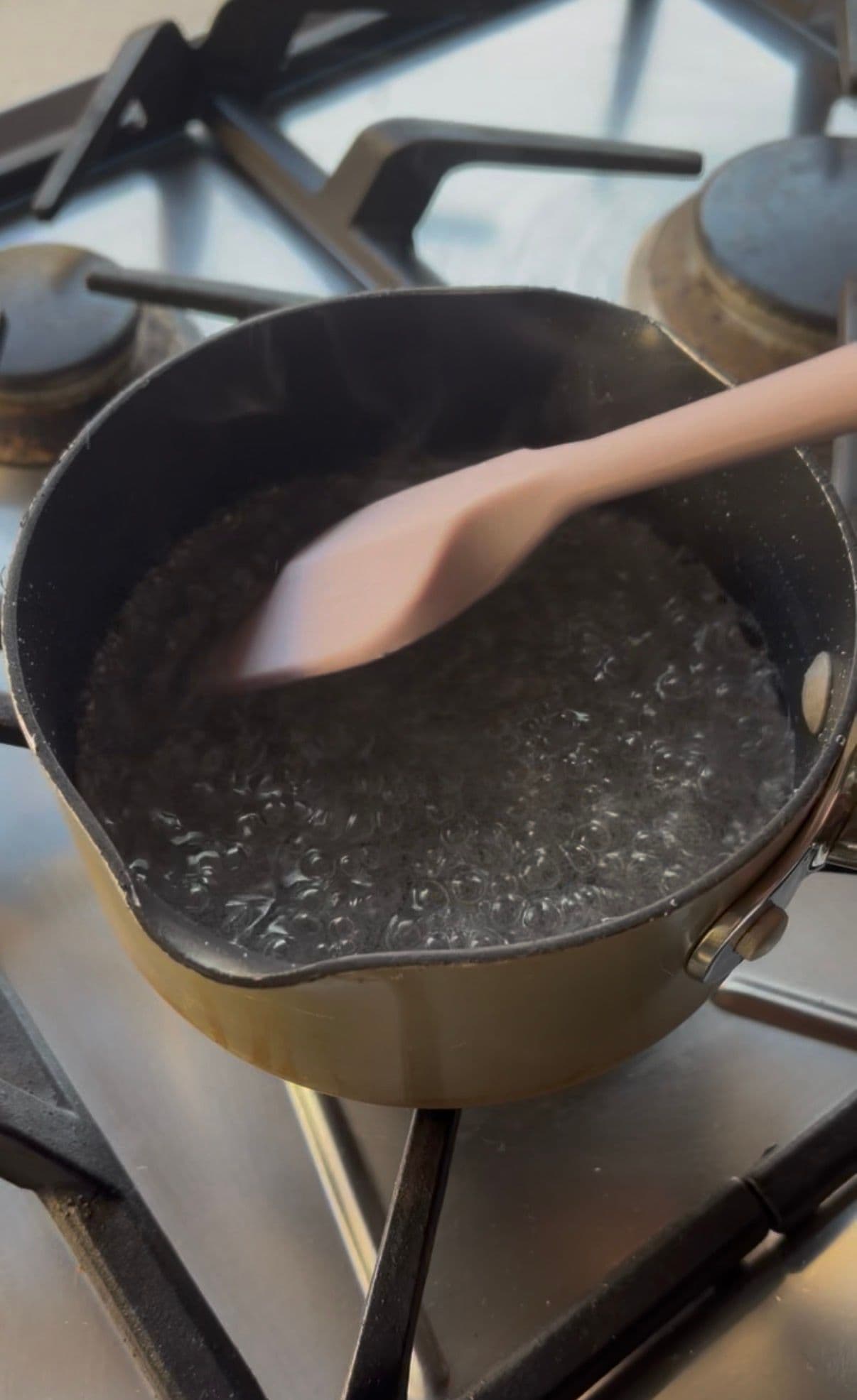
Once it bubbles, drop in the thermometer and raise to medium-high. Do not stir again from here, or the syrup can crystallise.
1
2
2. Whip and pour
- 1
At 110°C start the mixer and whip the whites to soft peaks: lift the whisk and the peak should flop over rather than stand up. At 116°C take the syrup off the heat.
- 2
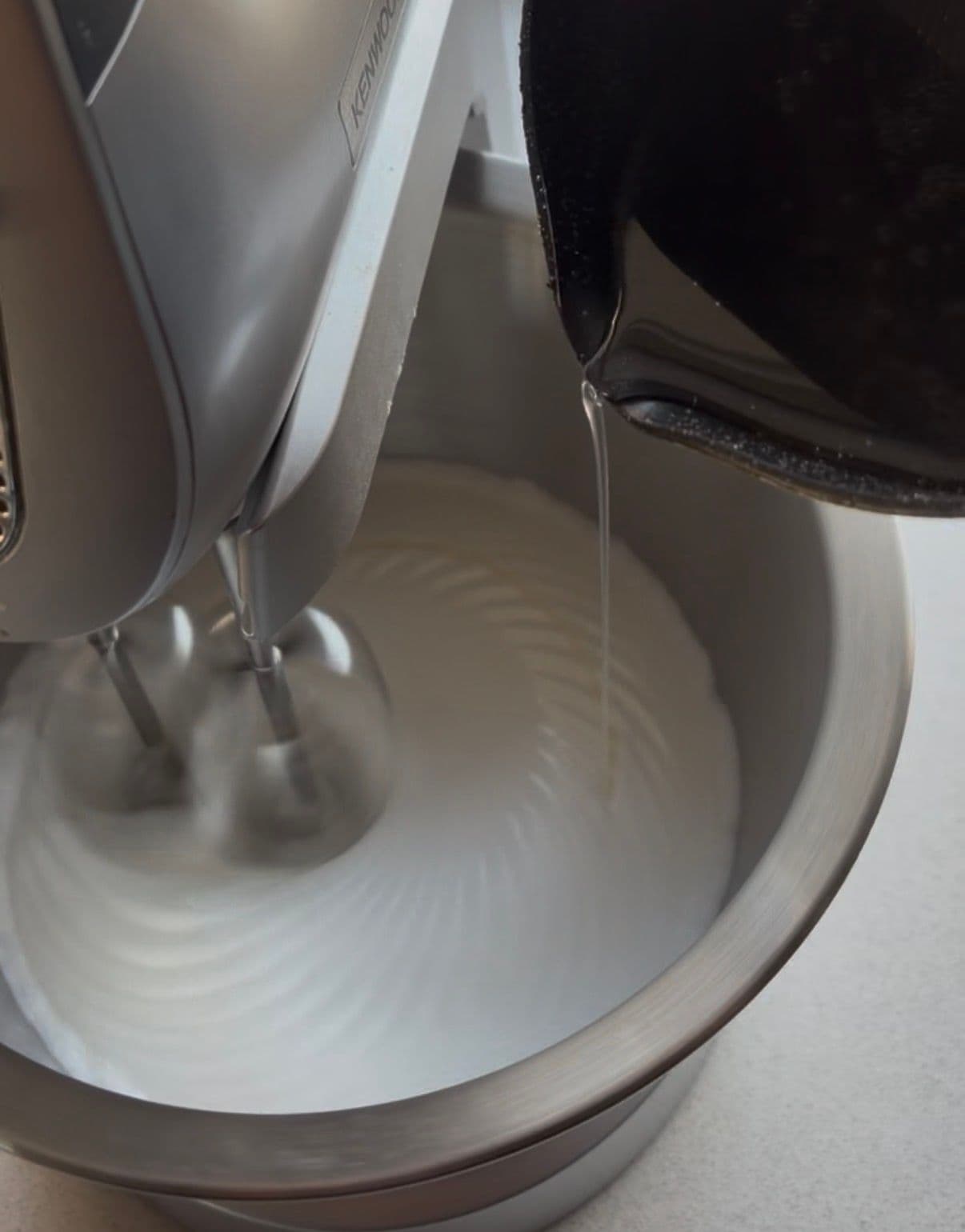
With the mixer running, pour the syrup down the side of the bowl in a thin stream, avoiding the whisk. Add the cream of tartar and vanilla, then whip 5 minutes more until the meringue holds a standing peak and the bowl feels cool.
1
The Recipe
Prep10 min
Cook15 min
Total25 min
Serves8
DifficultyMedium
Ingredients
for 8 serves
Instructions
Wipe the mixer bowl, whisk and spatula with white vinegar on paper towel. Any fat will stop the whites whipping.
Set up before you start: sugar and water in a saucepan, egg whites in the mixer bowl, cream of tartar and vanilla measured out beside the machine. Once the syrup is going you will not have time to fetch anything.
Put the sugar and water over medium heat for about 5 minutes, then stir for a minute to make sure the sugar has dissolved.
Once it starts to bubble, put in a digital thermometer and raise the heat to medium-high. Do not stir again from this point.
When the syrup hits 110°C, start the mixer and whip the egg whites to soft peaks. To check: lift the whisk straight out, and the peak should form and then flop over on itself rather than standing upright.
When the syrup reaches 116°C, take it off the heat. From first bubble this takes about 4 to 5 minutes.
With the mixer running, pour the syrup into the whites in a slow, thin stream down the side of the bowl, avoiding the whisk.
Add the cream of tartar and vanilla straight away, then whip for another 5 minutes, until the meringue is thick and glossy, holds a peak that stands up with a slight curl, and the outside of the bowl feels cool to the touch.
Tips & Notes
The one thing to get right: soft peaks
Stop the mixer and pull the whisk straight up out of the whites. Soft peak means a peak forms and then immediately flops over on itself, like the tip of a soft serve ice cream. It is white, it holds a shape, but the point will not stand up on its own. That is exactly where the whites should be when the syrup is ready.
If the peak stands straight up and stays there, you have gone past soft peaks into stiff. The whites are already fully expanded, so the hot syrup has nothing left to work with and the meringue comes out grainy and dry instead of silky. If that happens, start the whites again rather than trying to rescue them.
A note on the wording: what the whites do here is punto de nieve, first blando and then firme. Punto letra is a different thing entirely, the ribbon stage you take yolks or whole eggs to, where the batter falls thick enough to draw a letter on the surface. Whites never ribbon.
Wipe everything with vinegar first
Any trace of fat stops egg whites from whipping. Wipe the bowl, the whisk and the spatula with a little white vinegar on paper towel before you start. Plastic bowls hold grease in their scratches, so use metal or glass if you have the choice.
Not a speck of yolk
Yolk is fat. Separate each white into a small cup first and tip it into the mixing bowl only once you can see it is clean, so one broken yolk does not cost you the whole batch.
Do not stir the syrup once it boils
Stir at the start to dissolve the sugar, then stop entirely. Agitating boiling syrup encourages it to crystallise and you end up with a grainy meringue. If crystals form on the side of the pan, brush them down with a wet pastry brush rather than stirring them in.
The two temperatures that matter
At 110°C you start the mixer, so the whites reach soft peaks exactly as the syrup is ready. At 116°C the syrup comes off the heat. Below that it is too loose and the meringue will not hold; much above 121°C and it turns chewy and hard to spread.
If the two do not line up
This is the part that catches people out. If the whites hit soft peaks early, drop the mixer to its lowest speed and let it keep turning until the syrup is ready. If the syrup gets to 116°C first, pull it off the heat and let it sit while the whites catch up. Never stop the mixer completely, and never put the syrup back on the heat to reheat it.
Pour down the side of the bowl, in a thin stream
Aim between the whisk and the side of the bowl, never straight onto the moving whisk. Hitting the whisk flings molten syrup up the sides where it sets into hard threads and never makes it into the meringue. Slow and steady beats fast every time.
Whip until the bowl is cool
Five minutes is the guide, but the real test is the outside of the bowl. Keep going until it feels no warmer than your hand. Meringue used while still warm will slide off whatever you put it on.
What the finished meringue looks like
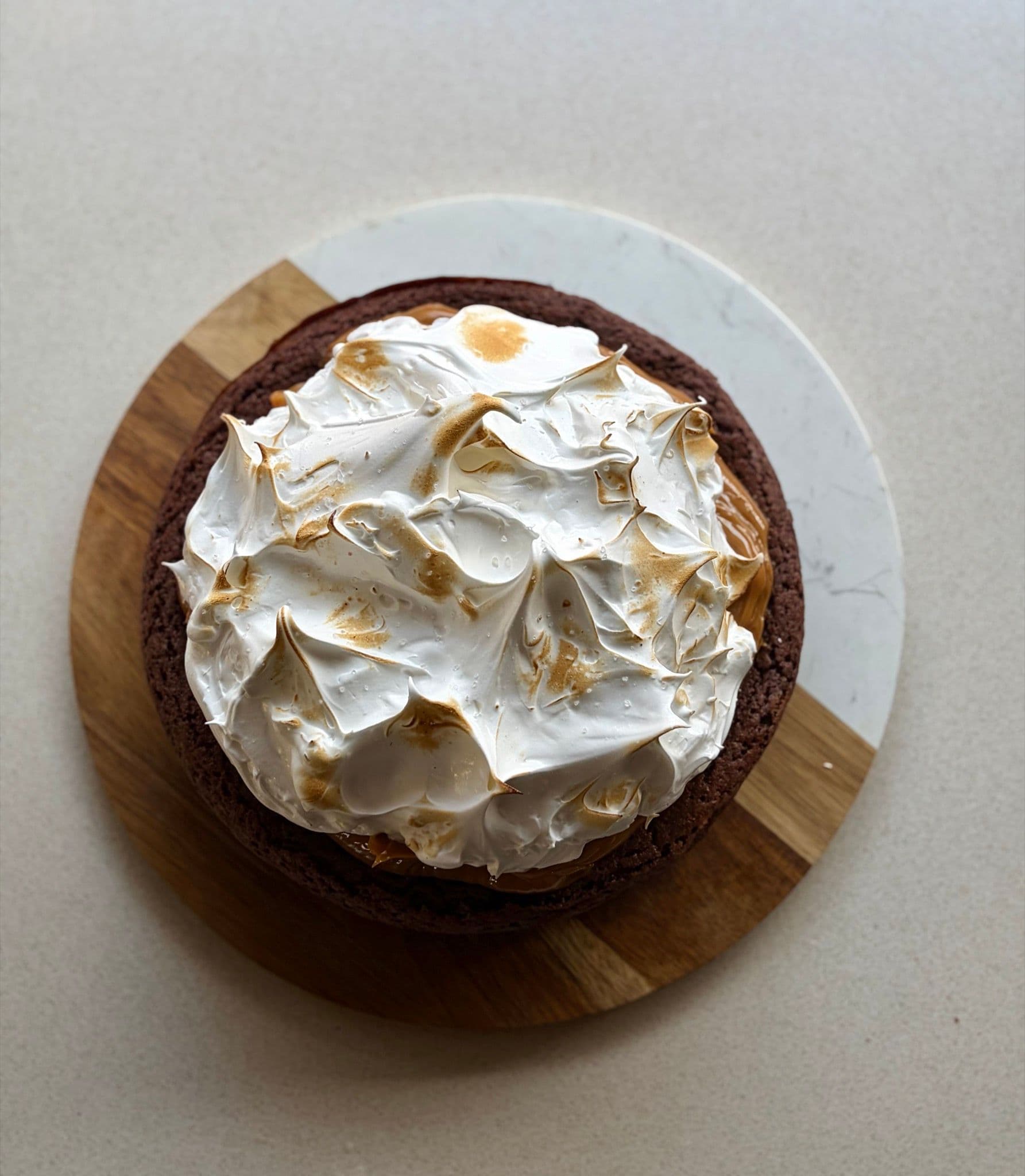
Thick, brilliantly glossy, and now it should hold a peak that stands up with just a slight curl at the very tip. This is the one point in the recipe where you do want a firm peak. If it looks dull or grainy the syrup was too hot or got stirred. If it droops, it needed longer whipping or the syrup was under temperature.
No cream of tartar?
Half a teaspoon of lemon juice or white vinegar does the same job. It is an acid, there to stabilise the foam, and you will not taste it.
Humidity is the enemy
Sugar pulls moisture out of the air. On a very humid day the meringue will be softer and weep sooner, so make it on the day you plan to serve rather than ahead.
Keeping it
Best used within an hour or two of making, while it is at its most pipeable. It will hold in the fridge for up to 2 days in a covered container, though it stiffens and loses a little gloss. Do not freeze it.
Nutrition per serving
- Calories
- 106 kcal
- Protein
- 1.4 g
- Carbohydrates
- 25.3 g
- Total Fat
- 0 g
- Dietary Fiber
- 0 g
- Sugars
- 25.1 g
- Sodium
- 22 mg
Per serving, calculated from the ingredient list using USDA reference data. Estimates only, and they will shift with brands, portion size and how much of any sauce or oil you actually eat.
How It Turned Out
Reviews
Leave a Review